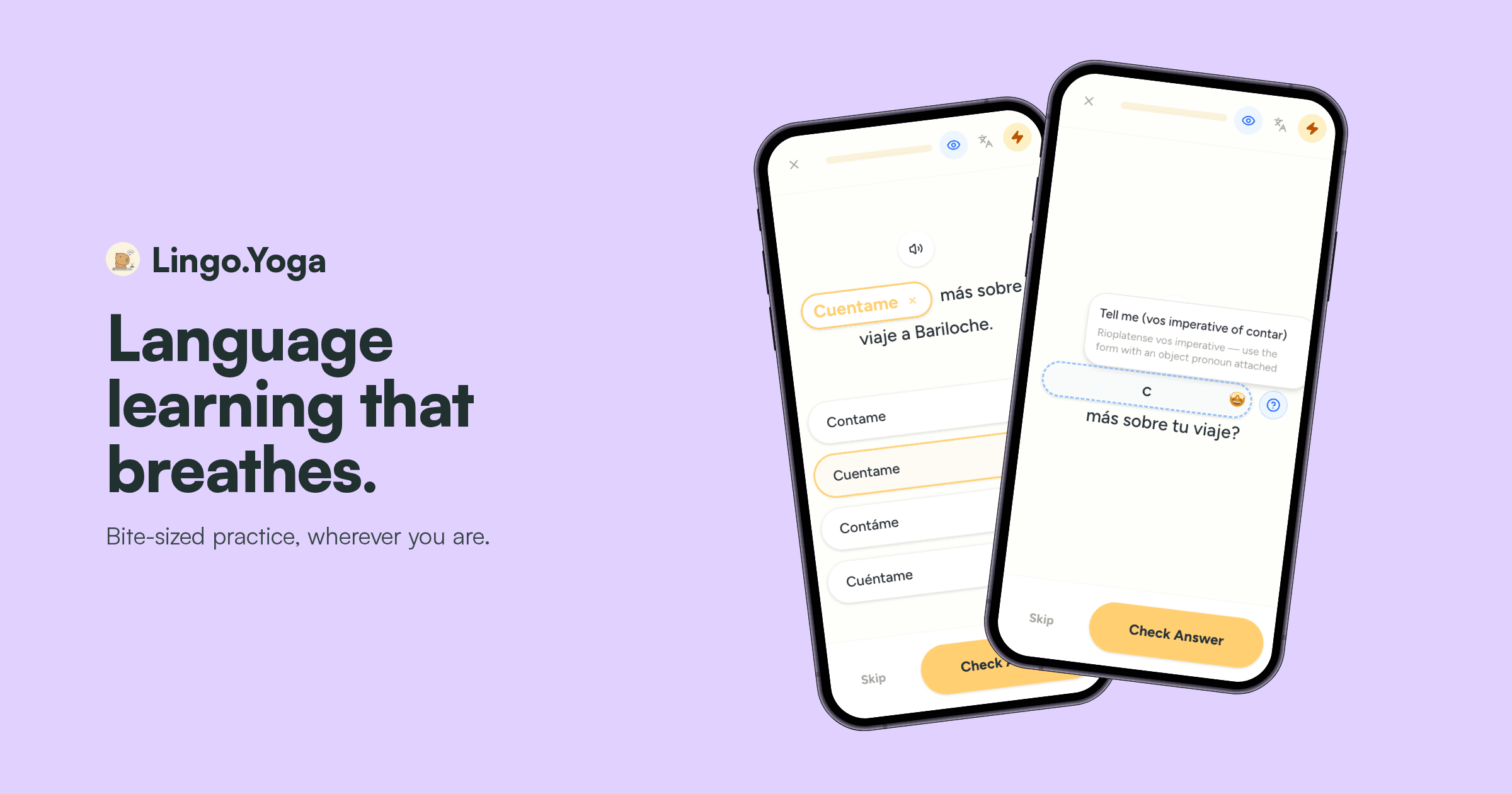
A calmer way to learn a language, built from the content you actually care about - and the only project I've worked on where the visionary is nine years old.
I'll get the obvious objection out of the way first: yes, there are already a million language apps. So this only earns its place if it does something genuinely different, and it does two things.
Head of capybaras, age nine
The first is whose idea it is. Lingo.Yoga is a family project I build with my niece, Izzy. She's nine, she's the visionary, and I handle what our about page accurately calls "the boring bits" - the code, the infrastructure, making her ideas actually work. She's also the reason there are capybaras all over the app. I mention this not because it's cute (though it is), but because a kid's instinct for what learning should feel like turned out to be sharper than most of the industry's.
Against streaks and somebody else's apples
Here's what she was reacting against. Most apps teach you predetermined lessons about red apples and libraries: vocabulary a curriculum designer picked, not you. Then they wrap it in streaks and leaderboards, so you end up afraid of breaking a chain rather than enjoying the language. Brilliant for daily-active-user charts. Less brilliant for actually getting fluent, or for still being there in three months once the notification guilt has worn you down.
Your content, not theirs
So we built the opposite, and that's the second difference. You bring the content you already care about - paste an article, drop in a URL, upload something in the language you're learning - and Lingo.Yoga turns that into your practice. It reads what you gave it, pulls out the vocabulary and grammar that actually matter at your level, and builds exercises around them: fill-the-gap, audio challenges, memory cards, all scheduled by a spaced-repetition system so the things you learn actually stick. You're learning from the news you'd read anyway, or the lyrics you can't get out of your head, instead of somebody else's sentence about a library.
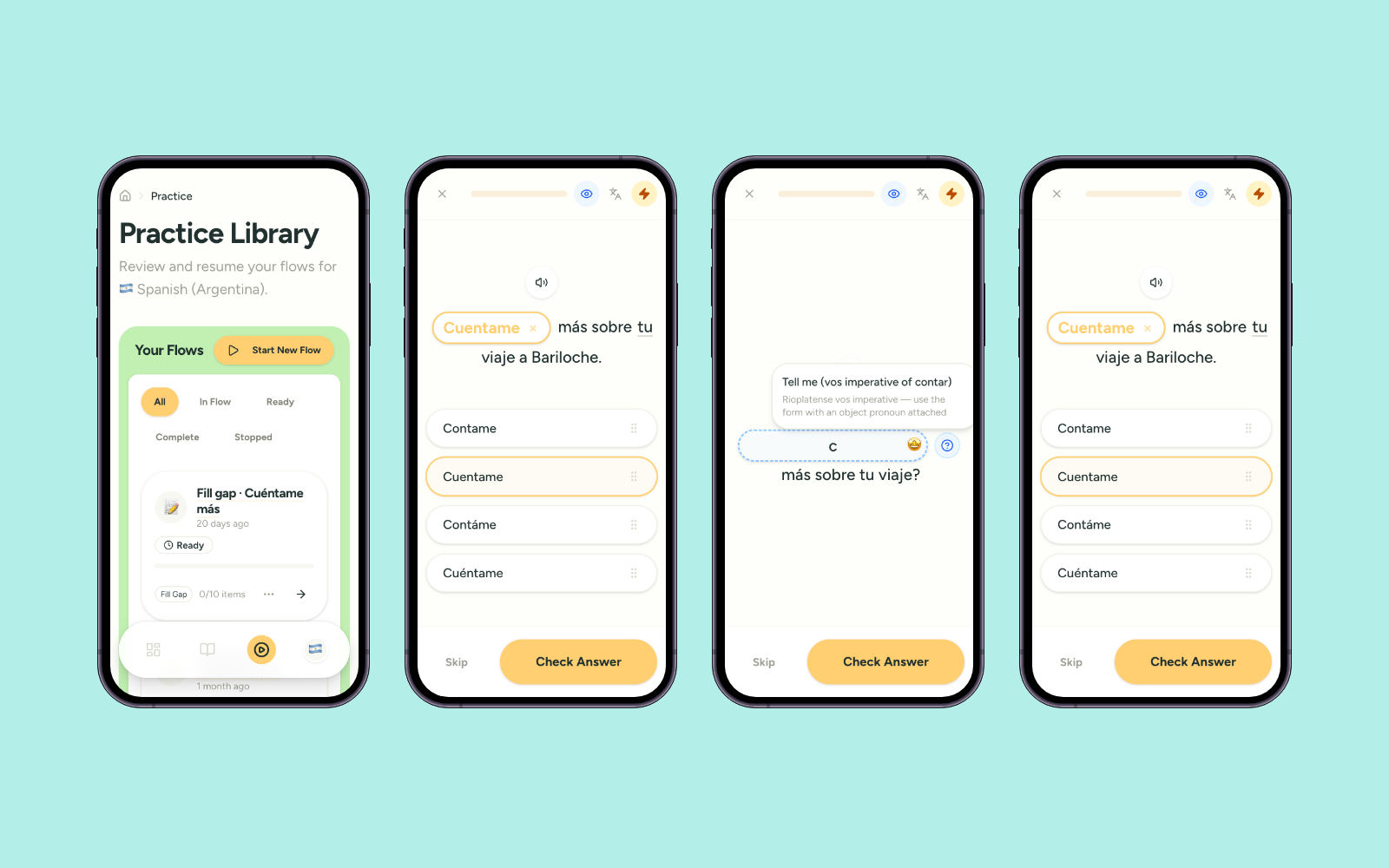
Why it talks like a yoga studio
The whole thing borrows the language of yoga, on purpose. It's a "studio", not a dashboard: a place to practise, not somewhere that watches you. You find a "rhythm", not a "streak". Finishing a session is a quiet "complete", not a confetti-cannon "winner". The point is a sustainable practice you return to because you want to, not because an app is nagging you. My favourite line from an early user got it exactly right:
Finally, an app that doesn't guilt me into using it.
Dialect-aware by design
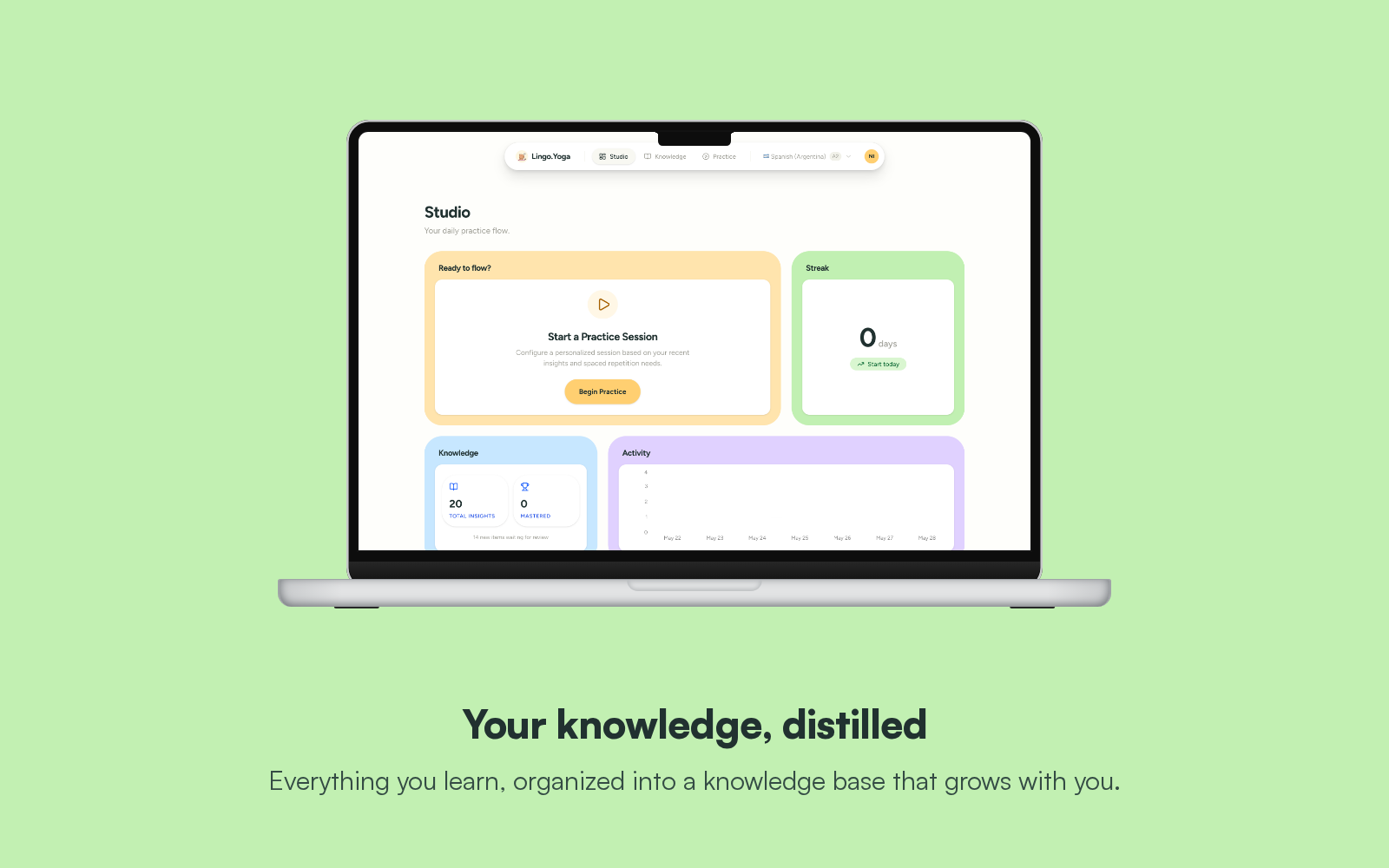
One more thing I genuinely care about: it doesn't teach you "Standard Spanish". Language is local, so the app is dialect-aware - it'll teach you the vos of Buenos Aires rather than the vosotros of Madrid, with audio tuned to the actual accent. Twenty languages and thirty-one regional variants at last count, including a recent run of Bulgarian, Macedonian, Serbian, Slovenian and Ukrainian.
The clever part Izzy doesn't care about
Under the hood it's a Next.js progressive web app, with Anthropic's models doing the analysis and exercise-writing, OpenAI handling transcription and the dialect-aware text-to-speech, and a fair amount of obsessive engineering to make the AI generate good pedagogy reliably rather than impressively once. But honestly, the tech is the boring bit - Izzy's right about that. It's in public beta now, free to start, and growing a little every week.